What Is Range Trading and When It Works Best in 2026?
FiveTec Editorial Team | Published on November 3, 2026 | 10 min read

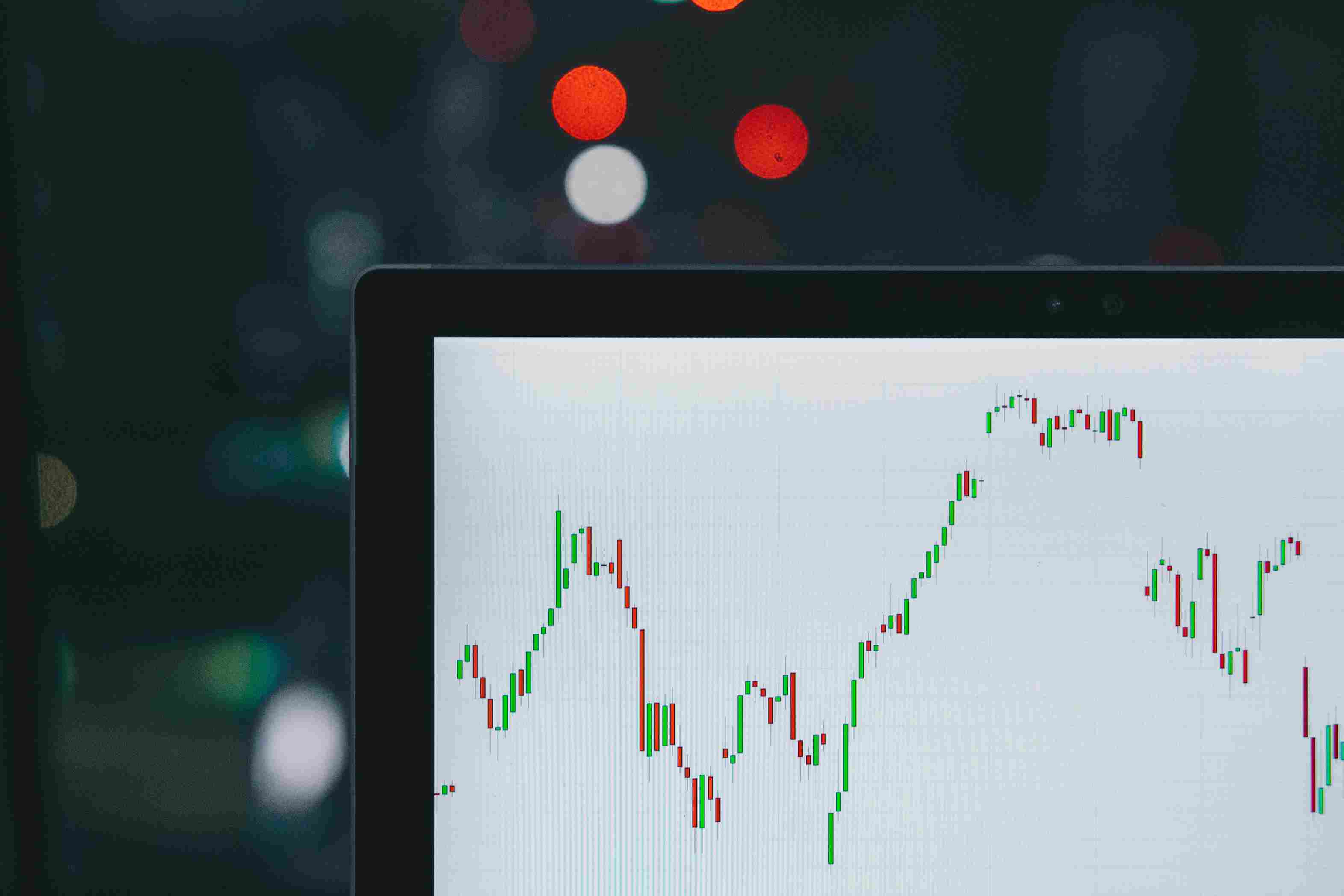 Here is a statistic most retail traders at FiveTec Global Capital never think about. According to decades of market structure research, forex pairs spend approximately 65 to 70 percent of their time in some form of range or consolidation rather than trending clearly in one direction. If you have been trading only breakouts and trend continuations and wondering why so many of your setups fail, this statistic is probably the reason. You have been applying trending strategies during the majority of time when the market is not actually trending.
Range trading is the specific strategy that fits those long consolidation periods, and when it is executed correctly, it produces some of the highest win rates in all of retail trading. The challenge is that most beginners either do not recognise ranges when they form, trade them like breakouts, or hold through the inevitable breakout that eventually ends every range. Each of these mistakes is fixable with a clear framework.
Let me walk you through exactly what range trading is, when the strategy works best, and the specific framework that separates profitable range traders from the ones who keep getting caught by false signals in the current November 2026 market environment.
The Direct Answer
Range trading is a strategy that profits from price oscillating between a clear support level (the floor) and a resistance level (the ceiling) without breaking out in either direction. The core logic is to buy near support and sell near resistance, repeating the cycle as long as the range holds. Win rates on well-executed range trades typically run 55 to 70 percent, significantly higher than trend-following strategies, though individual winners are smaller. Range trading works best during periods of low volatility, consolidation after extended trends, pre-news positioning quiet periods, and in forex pairs with low central bank policy divergence. It works worst during strong trending markets, immediately after major fundamental catalysts, and when a range is about to break down. Range trading sits on the counter-trend side of the strategy spectrum and pairs naturally with the frameworks covered in trend following vs counter-trend trading.
What Actually Defines a Tradable Range
Every trader at FiveTec Global Capital should understand the four specific characteristics that define a genuinely tradable range. Trying to trade something that merely looks like a range on the chart but does not meet these criteria is one of the most common ways beginners lose money with this strategy.
At least three clean touches of each boundary. A true range has price touching support at least three times without breaking it, and touching resistance at least three times without breaking it. Two touches is a potential range forming; three or more touches is confirmation. The more touches a level has held, the stronger it typically becomes, though every range eventually breaks.
Horizontal or near-horizontal boundaries. The support and resistance levels should be relatively flat rather than sloping. Sloping channels (ascending or descending) are a related but different structure that requires modified trading rules. Pure range trading works best when the boundaries are clearly horizontal and the range is visible to most traders looking at the chart.
Clear middle zone with lower volume. True ranges typically show declining volume toward the middle of the range as traders wait for approaches to the boundaries. Volume should pick up near both the support and resistance levels where decisions actually get made. This volume profile is one of the signals that distinguishes real consolidation from a pause in a continuing trend.
Clean rejection candles at both boundaries. Each time price approaches support or resistance, there should be visible rejection in the form of hammers, shooting stars, pin bars, or engulfing patterns. These rejection patterns confirm that other traders are also defending the levels, which is what makes range trading viable. A range where price just drifts through boundaries without rejection is not a tradable range.
The Range Trading Entry Framework That Works
Here is the specific entry logic I use for range trades at FiveTec Global Capital. Follow this framework and you filter out the majority of range trades that look appealing but produce losses.
Entry Rule 1: Enter near the boundary, not at the middle. The highest-probability range trades enter within 10 to 20 pips of the actual support or resistance level, not in the middle of the range. Entries at the middle have terrible risk-reward because you are far from the invalidation point and only halfway to the target. Patient traders wait for price to come to them.
Entry Rule 2: Wait for rejection confirmation. Rather than placing limit orders at the exact support level and hoping, wait for price to actually touch the level and show a rejection candle on your chosen timeframe. This confirms that other traders are defending the level with you, which dramatically improves the probability of the range holding for your trade. The retest patience here mirrors what works in breakout trading, where waiting for retests filters out most fakeouts.
Entry Rule 3: Use RSI or Stochastic as a secondary filter. RSI readings below 30 at support or above 70 at resistance significantly improve range trade probability. Stochastic readings in similar extremes work the same way. These oscillators are specifically designed for range-bound markets and genuinely add predictive value when the market is actually ranging, though they add almost no value during strong trends.
Entry Rule 4: Stop loss just beyond the boundary. Your stop loss should sit 15 to 30 pips beyond the support or resistance level you are trading, giving the range enough room to breathe without producing immediate stop-outs. Tighter stops get hit by the normal volatility that exists even in ranging markets.
Entry Rule 5: Take profit at the opposite boundary. The target is the opposite side of the range, with partial profit-taking at the midpoint for conservative management. Aiming beyond the opposite boundary is where range trading becomes breakout trading, which is a completely different strategy with different rules.
When Range Trading Works Best
Being specific about this matters because applying range trading in the wrong environment produces consistent losses even with perfect individual execution.
Range trading works best during low-volatility consolidation periods. When the Average True Range on your preferred timeframe is below its 50-period average, markets are typically in consolidation mode where range trading dominates. The pre-holiday periods, the quiet summer weeks, and the days immediately following major Fed decisions often produce extended range environments.
It works best after extended trends. Markets rarely trend indefinitely. After a strong directional move of three to six weeks, consolidation and range development become statistically likely as the trend exhausts and traders take profits. These post-trend ranges often last 2 to 8 weeks before the next directional move begins.
It works best on currency pairs with similar central bank policies. When the US Federal Reserve and the European Central Bank are both in similar policy stances (both cutting, both holding, or both hiking), EUR/USD often ranges because there is no strong policy divergence to drive sustained directional moves. Through much of 2026, the EUR/USD has oscillated in defined ranges for exactly this reason.
It works best during quiet news weeks. Weeks without high-impact scheduled news (NFP, CPI, FOMC decisions, ECB meetings) tend to produce range-bound conditions where range trading dominates breakouts. Checking the economic calendar before deciding whether to range-trade or trend-trade is essential rather than optional.
When Range Trading Fails Badly
Equally important: here are the specific situations where range trading produces consistent losses and should be avoided entirely.
Immediately after major fundamental catalysts. A surprise Fed decision, a geopolitical shock, or unexpected economic data typically produces sustained directional moves that break through what looked like established ranges. The period from the news release through the following two trading days is almost always a trending environment where range trading fails.
During strong directional trends. When daily charts show clear higher highs and higher lows (uptrend) or lower highs and lower lows (downtrend) with price above or below major moving averages, the market is in trend mode. Range trading during these periods produces frustrating sequences of losses as the apparent reversals turn into trend continuations.
At the fifth or sixth test of a range boundary. Every range eventually breaks. The longer a range has lasted and the more times a boundary has been tested, the higher the probability that the next test produces the break rather than another reversal. Range trades become statistically weaker as the range matures.
On exotic pairs or during low-liquidity sessions. Range trading relies on sustained respect for support and resistance levels, which requires reasonable liquidity. Exotic forex pairs with wide spreads and thin volume often produce false range appearances that break down the moment serious volume enters. Stick to major pairs during active sessions for cleanest range trading. The complete breakdown of which forex pairs work best at FiveTec Global Capital covers which specific pairs typically range vs trend.
The Three Mistakes New Range Traders Make
I see the same three mistakes constantly from traders learning range trading at FiveTec Global Capital. Fix these and your range trading improves immediately.
Trading ranges that have not been confirmed yet. The temptation to call something a range after two touches is strong because the risk-reward looks attractive. The honest reality is that two-touch "ranges" break out roughly as often as they produce another reversal, which makes them 50/50 bets rather than high-probability setups. Wait for the third touch confirmation even though it means missing some genuine ranges.
Not accepting that every range eventually breaks. New range traders often add to losing positions when a range appears to break, assuming the break is false and the range will reassert. Sometimes this works. More often it turns a small defined loss into a catastrophic one as a genuine new trend develops. Honour your stop losses even when you believe strongly in the range.
Using the same position size as trending trades. Because range trades have smaller winners than trend trades, some traders size up to compensate. This is backwards. Range trades should use the same 1 percent risk per trade rule as any other strategy, and position sizing based on the stop loss distance rather than the target distance. Following the complete risk management framework applies as directly to range trading as to any other style.
Frequently Asked Questions About Range Trading
What timeframes work best for range trading?
Higher timeframes (4-hour, daily) produce cleaner ranges with lower false signal rates. The 15-minute and 1-hour timeframes can work but require stricter confirmation rules because what looks like a range on faster charts often resolves differently on higher timeframes. Many professional range traders use multi-timeframe analysis, identifying the range on the 4-hour chart and executing entries on the 15-minute or 1-hour.
Can you use range trading on indices like NAS100 and US30?
Yes, but less frequently than on forex. Indices tend to trend more consistently than currency pairs due to the structural upward bias in equities over time. However, defined ranges do form on indices during consolidation periods, particularly before major earnings releases or Fed decisions. The approach is covered in detail in how to trade NAS100 and US30 at FiveTec Global Capital.
Which indicators work best for range trading?
RSI, Stochastic Oscillator, and Bollinger Bands are specifically designed for range-bound markets and genuinely add value when markets are ranging. Moving averages work less well in ranges because they produce frequent false signals. The counter-intuitive truth is that the simpler oscillators often outperform complex indicators in range environments.
How do you know when a range is about to break?
Three signals typically precede range breakouts: increasing volume on boundary tests, failed tests that do not reach the opposite boundary (showing weakening range momentum), and compression of the Bollinger Bands indicating volatility expansion is imminent. None of these are perfect predictors, which is why disciplined stop losses matter.
Should you trade both long and short within the same range?
Yes, this is actually the primary advantage of range trading. You buy at support, sell at resistance, buy at support again, and so on. A single well-defined range can produce multiple profitable trades in both directions, which is why range trading can produce consistent returns during consolidation periods.
What is a reasonable risk-reward ratio for range trades?
Typical range trade risk-reward runs 1 to 1.5 or 1 to 2, lower than trend trading but acceptable given the higher win rate. The math works out favourably because 60 percent of 1:1.5 trades produces better long-term returns than 35 percent of 1:3 trades for most traders.
Can you combine range trading with other strategies?
Yes, specifically with breakout trading. Many professional traders range-trade until the range breaks, then switch to breakout trading in the new trend direction. Keep the strategies mechanically separate even though they share the same chart, with range trades following range rules from entry to exit and breakout trades following breakout rules.
Related Reading on FiveTec Global Capital
For readers who want to go deeper into the specific topics mentioned throughout this guide, these related FiveTec Global Capital articles cover the operational and strategic foundations that support successful range trading:
-
Trend Following vs Counter-Trend Trading: Which Style Suits You — Understand how range trading fits within the counter-trend framework and whether this strategic approach matches your personality.
-
What Is Breakout Trading and How to Avoid Fakeouts — Learn the opposite strategy that profits when ranges break, which pairs naturally with range trading as part of a complete framework.
-
Technical Analysis for Beginners — Master the chart reading foundations required for identifying support, resistance, and range structures.
-
Risk Management: The Complete Framework for Traders — Learn the position sizing and stop loss discipline that keeps range trading sustainable even when ranges eventually break.
-
The Psychology of Trading: Emotions, Discipline, and Decision-Making — Build the emotional discipline required to wait for proper range confirmation rather than entering too early.
-
Which Forex Pairs Can You Trade on FiveTec Global Capital — Understand which specific pairs typically range vs trend to match your preferred style with the right instruments.
-
How to Build a Trading Journal and Why Every Trader Needs One — Track your range trade win rates by market condition to discover which specific environments produce the best results for your style.
Risk Disclosure
Trading forex and CFDs at FiveTec Global Capital involves significant risk and may not be suitable for all investors. Between 74 and 89 percent of retail CFD accounts lose money according to European regulatory data. Range trading strategies carry substantial risk of loss, including the risk of ranges breaking and producing larger losses than anticipated. Statistics cited (win rates, time spent ranging, risk-reward ratios) represent general industry benchmarks for well-executed strategies and will vary significantly based on individual implementation, market conditions, and risk management discipline. Market environment examples described reflect general 2026 conditions as of November 2026 and should not be relied upon as current trading signals. Past performance of any strategy is not indicative of future results. This content is for educational and informational purposes only and does not constitute financial advice or a trading recommendation. Always conduct independent research, practice strategies thoroughly on a demo account, and consider seeking advice from a qualified financial professional before making trading decisions.